
The holiday season may be full of joy, but it can also be a huge source of stress. If your go-to stress relief strategy is a glass of wine, consider these healthier alternatives.
Beans and barley
Comfort food doesn’t just taste great; but can help you feel calmer too.
Next time the holiday hubbub has you on edge, whip up a hearty winter soup with barley and beans. These foods are a great source of phosphatidylserine, which has been shown to support cognitive function and help decrease levels of the stress hormone cortisol.
While barley, beans, rice, and some other foods are good sources of phosphatiylserine, a higher dose phosphatidylserine supplement may be especially helpful for people with significant ongoing stress.
For a calming, quick fix later on, make a big batch of winter soup now and freeze some for easy meals later.
Festive fruits
‘Tis the season for satsumas.
While satsumas and tangerines are both types of mandarins, satsumas are arguably the lower stress version of this kind of citrus fruit. Satsumas are easier to peel, seedless, and taste sweeter than tarter tangerines that have tighter skin and often contain seeds.
Whether you’re team tangerine or sticking with satsumas, citrus fruits in general are rich in vitamin C to help support immune function and overall health. A good dose of vitamin C can also help cortisol levels return to normal faster after psychological stress.
Dark chocolate
For the ultimate calming treat, consider dark chocolate orange. Or, if that’s not to your taste, any low sugar, low fat, high quality dark chocolate will do.
Why? Because dark chocolate contains antioxidants that help the body manage inflammatory processes and cortisol metabolism.
Around 40g per day of dark chocolate (80% or more cocoa) seems to be most effective, per the arduous research undertaken by some lucky volunteers. Other research also suggests that eating a small amount of dark chocolate could help prevent overeating later, particularly in postmenopausal women.
Chia pudding (or flax, fish, and algae!)
Chia pudding is both delicious and a great source of tryptophan (see below!) and omega-3 essential fatty acids. These tiny seeds may help to keep cortisol in check, with studies showing that long-chain omega-3 fatty acids helped reduce basal cortisol levels and subjective feelings of stress.
However, some people have a hard time converting the omega-3 in chia and flax into long-chain eicosapentanoic acid (EPA) and docosahexanoic acid (DHA). That means, ready-made sources of EPA and DHA, such as fish, fish oil, and algal oil may be better stress-busters.
Maybe skip the fish pudding, though.
To whip up some chia pudding, mix the following together in a glass jar, cover, and chill in the refrigerator overnight:
· Half a cup of unsweetened non-dairy mil
· 2 tablespoons of chia seeds
· Half a teaspoon of agave or maple syrup
· A quarter teaspoon of cinnamon powder.
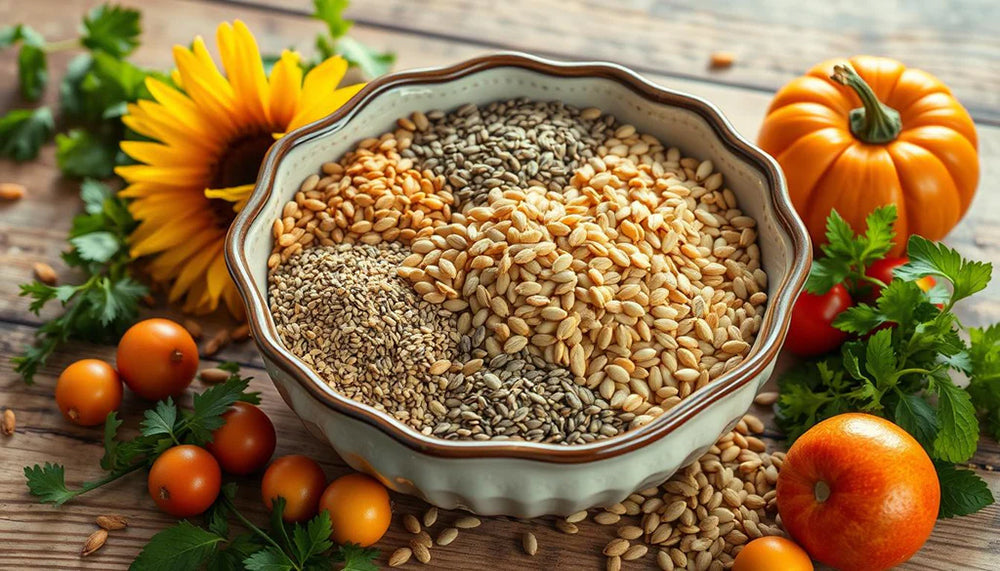
Wheatgerm and pumpkin seeds
Wheatgerm and pumpkin seeds are chock full of useful nutrients, including zinc, magnesium, and tryptophan, which is a precursor to the happy brain hormone serotonin.
Together, these nutrients help to support healing, immune function, hormone balance, and cognitive and emotional health.
Impressively, pumpkin seeds contain 576 mg of tryptophan per 100 g. That’s more than you get in four slices of turkey!
Wheatgerm and pumpkin seeds are also good to have on hand for the holiday season. Add these to festive baking, breakfast cereal, breads, stuffing, and other foods or just snack on toasted pumpkin seeds while on the go.
A good cuppa
There’s a reason many of us put the kettle on when there’s a crisis.
A good cuppa (when made with black tea) is a great source of the amino acid theanine. This nutrient has been seen in studies to help decrease cortisol levels and create calmer patterns of brain wave activity. Specifically, theanine can help promote alpha brain waves (associated with calm awareness) versus beta brain waves (associated with more anxious, high alert states of arousal).
A cup of black tea contains around 20 mg of theanine. Most studies that have demonstrated cognitive and emotional benefits of theanine use doses of 50 mg, meaning you might want to steep your tea longer than usual and settle in for a second cup.
Theanine supplements are also available to help you keep calm and carry on without having the same snooze-inducing effect of turkey.
Still, nothing quite beats a nice cup of tea when the holiday season starts to feel more stressful than joyful.
References
Glade, M. J., & Smith, K. (2015). Phosphatidylserine and the human brain. Nutrition (Burbank, Los Angeles County, Calif.), 31(6), 781–786.
Stachowicz, M., Lebiedzińska, A. (2016). The effect of diet components on the level of cortisol. Eur Food Res Technol 242, 2001–2009
Brody, S., Preut, R., Schommer, K. et al. (2002). A randomized controlled trial of high dose ascorbic acid for reduction of blood pressure, cortisol, and subjective responses to psychological stress. Psychopharmacology 159, 319–324.
Hellhammer, J., Vogt, D., Franz, N. et al. (2014). A soy-based phosphatidylserine/ phosphatidic acid complex (PAS) normalizes the stress reactivity of hypothalamus-pituitary-adrenal-axis in chronically stressed male subjects: a randomized, placebo-controlled study. Lipids Health Dis 13, 121.
Barbadoro, P., Annino, I., Ponzio, E., et al. (2013) Fish oil supplementation reduces cortisol basal levels and perceived stress: a randomized, placebo-controlled trial in abstinent alcohilics. Mol Nutr Food Res 57(6):1110–1114
Al Sunni, A., & Latif, R. (2014). Effects of chocolate intake on Perceived Stress; a Controlled Clinical Study. International journal of health sciences, 8(4), 393–401.
Marsh, C. E., Green, D. J., Naylor, L. H., & Guelfi, K. J. (2017). Consumption of dark chocolate attenuates subsequent food intake compared with milk and white chocolate in postmenopausal women. Appetite, 116, 544–551.
Mohammadi, H., Karimifar, M., Heidari, Z., et al. (2022). The effects of wheat germ consumption on mental health and brain-derived neurotrophic factor in subjects with type 2 diabetes mellitus: a randomized, double-blind, placebo-controlled trial. Nutritional neuroscience, 25(1), 46–53.
Nobre, A. C., Rao, A., & Owen, G. N. (2008). L-theanine, a natural constituent in tea, and its effect on mental state. Asia Pacific journal of clinical nutrition, 17 Suppl 1, 167–168.
White, D. J., de Klerk, S., Woods, W., et al. (2016). Anti-Stress, Behavioural and Magnetoencephalography Effects of an L-Theanine-Based Nutrient Drink: A Randomised, Double-Blind, Placebo-Controlled, Crossover Trial. Nutrients, 8(1), 53.